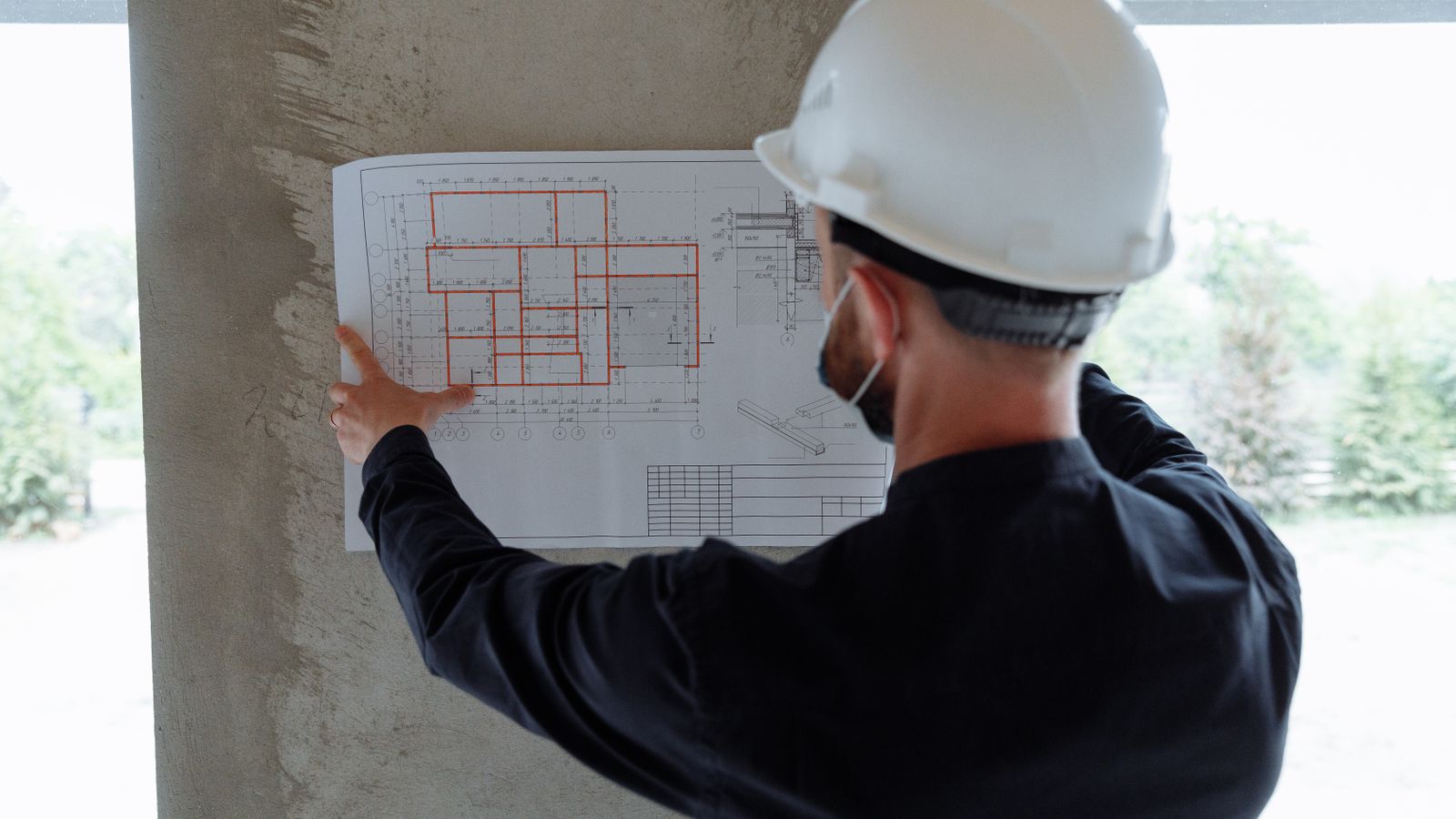
A general contractor (entrepreneur général) holds an RBQ licence with at least one Schedule I (annexe I) subclass and organizes, coordinates or carries out work on a type of building or structure. A specialized contractor (entrepreneur spécialisé) holds only Schedule II and III subclasses and works in a defined field. The regulation adds two owner-builder categories, for four in total.
The four licence categories
Section 3 of the regulation on professional qualification (B-1.1, r. 9) sets four licence categories. In the Building Act (section 7), "contractor" and "owner-builder" (constructeur-propriétaire) have precise meanings: a contractor works for others, an owner-builder works on their own account.
| Category | Possible subclasses | Work covered |
|---|---|---|
| General contractor | Schedule I, plus Schedule II and III subclasses if added | For others; main activity is organizing, coordinating or carrying out Schedule I work |
| Specialized contractor | Schedules II and III | For others; main activity is carrying out work in a specialized subclass |
| General owner-builder | Schedule I, except 1.1.1 and 1.1.2 | On their own account |
| Specialized owner-builder | Schedule II only | On their own account |
Only the first two are contractors under the Act. The answer to "what are the types of contractors?" therefore depends on what you count: two types of contractors, four licence categories. The official English terms are contractor, owner-builder, guarantor (répondant) and subclass (sous-catégorie).
Unless an exemption applies, no one may act as a contractor or as an owner-builder without a valid licence for that work (sections 46 and 48 of the Act). A contractor also may not hand work to another contractor who does not hold the required licence.
General contractor: the Schedule I subclasses
Schedule I has 11 subclasses. The best known:
- 1.1.1 and 1.1.2: new residential buildings covered by a guarantee plan (class I, then class II for divided co-ownerships);
- 1.2: small buildings, those under Part 9 of the National Building Code that are not in 1.1.1 or 1.1.2;
- 1.3: buildings of any kind, including those of subclass 1.2;
- 1.8: installation of petroleum equipment;
- 1.9: building mechanics.
Subclasses 1.4 to 1.7 and 1.10 cover roads and mains, civil engineering, telecommunications and electric power transmission, and mechanical lifts. To choose between 1.2 and 1.3, see the general contractor licence page.
Scope of the general licence:
- a general contractor may carry out Schedule III work on the buildings, installations or structures of their Schedule I subclass without adding those subclasses to the licence (the RBQ gives the example of site work on a 1.1.1 building);
- they may do Schedule II work only if that subclass is mentioned in the Schedule I subclass they hold (section 6 of the regulation);
- they cannot take on reserved work. Electrical work goes to contractors in subclass 16, even where the staff hold CCQ cards. Plumbing and heating go to master pipe mechanics (subclasses 15.1 to 15.5).
The regulation requires a general licence of anyone whose main activity is organizing, coordinating or carrying out Schedule I work (section 4).
Specialized contractor: Schedules II and III
Schedule II has 31 specialized subclasses, each with an execution exam. Schedule III has 13, with no execution exam. A few reference points:
| Work | Subclass | Schedule |
|---|---|---|
| Concrete, masonry and wood structures | 3.1, 4.1, 6.1 | II |
| Plumbing | 15.5 | II |
| Electricity | 16 | II |
| Excavation and earthwork | 2.5 | III |
| Insulation, waterproofing, roofing and exterior cladding | 7 | III |
| Finishing and painting | 9 | III |
There is no separate roofing subclass: roofing, insulation and exterior cladding sit together in subclass 7. The full list is in the article on RBQ licence subclasses.
The regulation applies the same rule: it requires the specialized licence of anyone whose main activity is carrying out work in those subclasses (section 7). If your main activity is organizing and coordinating all the work on a building, the general licence is the better fit. The full path is on the specialized contractor licence page.
For plumbing, heating and electricity, the application does not go to the RBQ: the Corporation des maîtres mécaniciens en tuyauterie du Québec (CMMTQ) handles subclasses 15.1 to 15.5, and the Corporation des maîtres électriciens du Québec (CMEQ) handles subclass 16. Subclasses 15.6 to 15.10 stay with the RBQ.
Owner-builder: work on your own account
The owner-builder carries out or has carried out work on their own account, for example a landlord renovating their own buildings. The general owner-builder chooses from Schedule I, except 1.1.1 and 1.1.2, which an owner-builder cannot hold. The specialized owner-builder chooses from Schedule II only. The application does not include a licence bond.
Several situations need no owner-builder licence:
- Schedule III work;
- work done entirely by a general contractor holding a valid licence;
- work by a natural person on their single-family house or on a structure for personal or family use, with no business, lodging or income. If they build to sell, they become a contractor; if they build to rent, they need an owner-builder licence;
- renovation, repair or maintenance of their own property estimated at under $20,000 (a regulatory threshold in section 11.1, not a 2026 fee), except electrical, gas and petroleum installations.
For this $20,000 threshold (a regulatory threshold, not a 2026 fee), the RBQ says it applies to each project, a project must not be split, and volunteer labour or free materials are valued at their estimated worth. Modification work, such as moving a wall, is not covered. A natural person can never carry out work on an electrical, gas or petroleum installation: that takes a contractor.
Which exams and which bond for each
The company’s guarantors (répondants) sit the exams, according to the licence type. One execution exam is required for each requested subclass (except Schedule III), and all must be passed to get the subclass.
| Licence type | Administration | Safety | Project management | Execution | Licence bond |
|---|---|---|---|---|---|
| General contractor | Yes | Yes | Yes | One per Schedule I or II subclass; none for Schedule III | $40,000 (2026 fee) |
| Specialized contractor | Yes | Yes | Yes | One per Schedule II subclass; none for Schedule III | $20,000 (2026 fee) |
| General owner-builder | No | Yes | Yes | One per Schedule I subclass, except 1.1.1 and 1.1.2 | None |
| Specialized owner-builder | No | Yes | No | One per Schedule II subclass | None |
Sources: RBQ, Examens : pour qui, comment, combien (opens in a new tab), RBQ, Obtenir un cautionnement (opens in a new tab) and B-1.1, r. 9 (opens in a new tab), sections 9, 10, 12.2, 24 and 26.
The $40,000 bond (2026 fee) applies as soon as any general subclass is requested, including in a mixed licence. The $20,000 bond (2026 fee) applies to licences with only specialized subclasses. A licence limited to subclasses 1.1.1 and 1.1.2 does not need one.
Even with only Schedule III subclasses, a specialized contractor sits the three management exams. For the full path from application to licence, see the guide to getting an RBQ licence.
How to choose
- You coordinate a whole project for clients (new house, commercial building): general licence, with the subclass for the building type.
- You do a single trade (painting, excavation, roofing, concrete): specialized licence. You do not need a general licence to work in your field.
- You renovate for clients: no subclass is named renovation. The Act (section 9) treats renovation as construction work, so you need the subclass that matches the work or the building. The RBQ gives painting and floor, wall and ceiling coverings as an example: subclass 9.
- You work on your own buildings: owner-builder, unless an exemption applies.
- You want to do "minor work": the words "minor work" (petits travaux) appear neither in the Act nor in the regulation. The only exemption in the regulation based on an estimated amount is the owner-builder one above. For a client, for profit, the RBQ says a licence is always required.
Workforce competence is the CCQ’s responsibility, and an RBQ licence does not replace it.
FAQ
What are the 4 types of contractors in Quebec construction?
The regulation sets four licence categories: general contractor, specialized contractor, general owner-builder and specialized owner-builder. Under the Act, only the first two are contractors, since they work for others.
What is the difference between a general and a specialized contractor licence?
The general contractor holds at least one Schedule I subclass and organizes, coordinates or carries out the work on a type of building or structure. The specialized contractor holds only Schedule II and III subclasses and carries out work in a defined field. The licence bond goes from $20,000 to $40,000 (2026 fee) once a general subclass is involved.
Can a general contractor do electrical or plumbing work?
No. Electrical work is reserved for electrical contractors (subclass 16), and plumbing and heating for master pipe mechanics (subclasses 15.1 to 15.5). A general contractor cannot have this work done by their own staff, even with CCQ cards.
Do I need an execution exam for a Schedule III subclass?
No, Schedule III has no execution exam. A specialized contractor with only Schedule III subclasses sits Administration, safety management, and project and site management.
Do I need a licence for small renovation jobs?
If you do them for a client, for profit, yes: the RBQ answers that a licence is always required, in the subclass that matches the work. The words "minor work" appear neither in the Act nor in the regulation. The exemption under $20,000 (a regulatory threshold, not a 2026 fee) covers only an owner-builder on their own property.
To prepare for the Administration, safety management and project management exams, you can explore the exams RBQexam offers. RBQexam is not affiliated with the Régie du bâtiment du Québec.
Information current to 1 October 2026. Bond amounts are the 2026 fee schedule, to be rechecked before 1 January 2027.