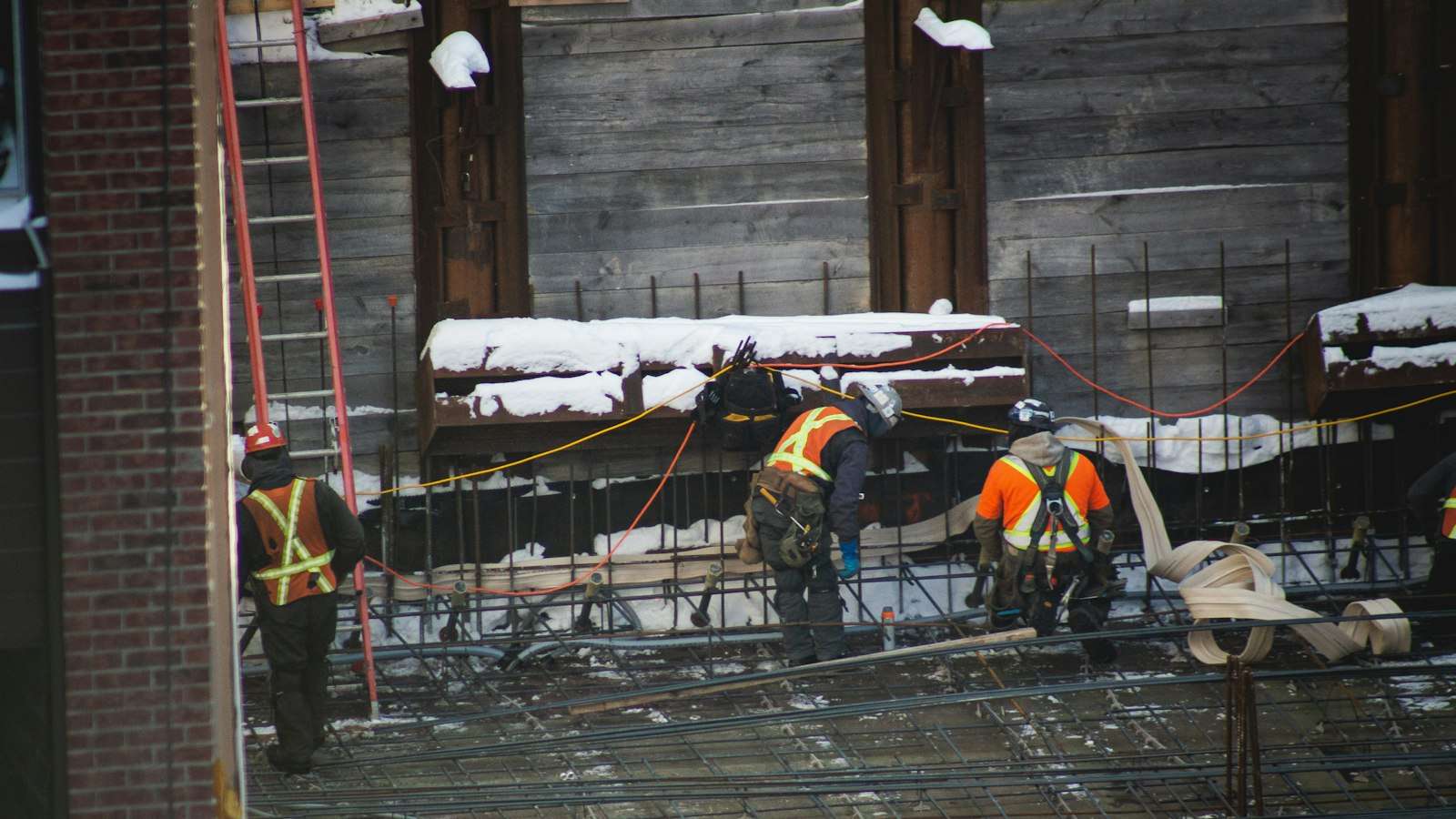
On a Québec construction site, two numbers matter: 10 and 20. As soon as the principal contractor (maître d’oeuvre) expects at least 10 construction workers on site at the same time, a site-specific prevention program must be drawn up before work starts (section 198 of the Act respecting occupational health and safety, known by its French acronym LSST). Once at least 20 are expected at the same time, the program must also be sent to the CNESST before work starts (section 200). The number 25 and the prevention program regulation belong to the past. This is a frequent trap on the RBQ safety management exam.
The rules at a glance
| Threshold (workers expected at the same time) | Duty | Where it is set out |
|---|---|---|
| At least 10 | Have the site prevention program drawn up, with the employers, before work starts | LSST, s. 198 (opens in a new tab) |
| At least 10 | Give a copy to the health and safety representative and to the construction sector’s joint association | LSST, s. 198 (opens in a new tab) |
| At least 20 | Send the program to the Commission (CNESST) before work starts | LSST, s. 200 (opens in a new tab) |
| No threshold | Content of the program | LSST, s. 199 (opens in a new tab) |
Texts checked on LégisQuébec on September 25, 2026 (LSST up to date to June 10, 2026). We cite the sections without reproducing the statute: read it at the source.
Who has to prepare it: the principal contractor
The section 198 duty falls on the principal contractor, not on each employer separately. The principal contractor must have the program drawn up, and that is done jointly with the employers on the site. Keep the wording straight: the principal contractor carries the duty, the employers take part.
The site-specific program now sits in sections 198 to 200 of the LSST. If your course notes point to a regulation for this topic, they probably predate the changes described below.
10 workers: the program must be drawn up
The section 198 trigger is at least 10 construction workers expected on site at the same time. You do not count everyone who will pass through the site over the whole job: you look at how many are expected to be there at the same time.
The program has to be ready before work starts. It is not a document you write once the site is up and running.
Who gets a copy
At this stage, a copy of the program goes to two recipients:
- the health and safety representative (représentant en santé et en sécurité);
- the construction sector’s joint sector-based association (association sectorielle paritaire, ASP Construction).
The CNESST is not on that list. This is where many candidates slip: with 10 to 19 workers expected, the program must exist and go to those two recipients, but it does not have to be sent to the Commission.
20 workers: it must be sent to the Commission
Section 200, in the version in force since January 1, 2023, requires the program to be sent to the Commission before work starts when at least 20 construction workers are expected at the same time.
Two mistakes come up often:
- Treating 20 as the drafting threshold. The 20 threshold is for sending it in. The drafting threshold is still 10.
- Using 25. From 1982 to the end of 2022, the old version of section 200 required sending the program from 25 workers, with other triggers too (building floor area, high-risk sites). That is no longer the rule. The current text keeps only the 20-worker threshold.
One more detail: section 200 requires sending the program before work starts, without setting a number of days. If a source gives you a precise deadline in days, check it against the Act.
What the program contains
Section 199 is about content, not headcount. In its version in force since October 1, 2025, it refers to part of what section 59 requires for an establishment’s prevention program. For the exact list, read section 199 and its history (opens in a new tab) on LégisQuébec. If an exam question asks which section deals with content, the answer is 199, not 198 or 200.
The prevention program regulation is repealed
The Regulation respecting prevention programs (S-2.1, r. 10) was repealed on October 1, 2025, by order in council 1155-2025 published in the Gazette officielle of September 10, 2025 (opens in a new tab). LégisQuébec now shows the repeal notice at the top of the regulation (opens in a new tab).
For your preparation: do not study it as current law. What may surprise you is that the Safety Management exam information sheet (opens in a new tab) (November 2024 update) still lists it as recommended reading. The sheet predates the repeal. Go by the Act itself.
Site-specific prevention mechanisms
The program is only one prevention tool. The rules on the site committee (comité de chantier), the health and safety representative and the coordinator are in the regulation on prevention mechanisms specific to a construction site (opens in a new tab) (S-2.1, r. 8.2), in force since January 1, 2023. The prevention program itself is not in that regulation: it is in the Act, sections 198 to 200.
For technical safety rules on site, the reference text is the Safety Code for the construction industry (opens in a new tab) (S-2.1, r. 4).
What it means for the RBQ exam
The Site Safety Management exam (officially, the examination of knowledge in safety management on construction sites) lasts 1 h 30. Its competency profile has 4 modules and 33 elements, and the first module is prevention management.
According to the November 2024 information sheet, three texts are handed out on exam day: the Act respecting industrial accidents and occupational diseases (A-3.001), the LSST (S-2.1) and the Safety Code for the construction industry (S-2.1, r. 4). So you will have the LSST in hand. What matters is knowing where to look and not falling for the number traps:
- 10: draw up the program (s. 198);
- 20: send it to the Commission (s. 200);
- 25: old rule, no longer in force;
- r. 10: repealed since October 1, 2025.
For more mistakes of the same kind, read common RBQ exam mistakes and RBQ exam changes in 2026. The RBQ regulatory calendar 2025 to 2027 gathers the key dates.
FAQ
Is a prevention program required on a site with 12 workers?
Yes, if those 12 workers are expected at the same time. From 10 workers expected at the same time, the principal contractor must have the program drawn up before work starts (LSST, s. 198). It does not have to be sent to the CNESST below 20 workers.
Do I have to send the prevention program to the CNESST?
Only when at least 20 construction workers are expected on site at the same time (LSST, s. 200). It must then be sent before work starts.
Does the 25-worker threshold still exist?
No. It was in the old version of section 200, replaced on January 1, 2023 by the 20-worker threshold.
Does the prevention program regulation still apply?
No. Regulation S-2.1, r. 10 has been repealed since October 1, 2025. The site-specific program now falls under sections 198 to 200 of the LSST.
Who gets a copy of the program at 10 workers?
The health and safety representative and the construction sector’s joint association. The Commission gets one only from 20 workers.
These thresholds stick better when you answer questions against the clock. RBQexam’s free timed practice exam uses original questions written to the 2025 and 2026 rules. RBQexam is not affiliated with the Régie du bâtiment du Québec.
Information current as of September 26, 2026.